New: Time Reports — Making the Work Behind Readiness Visible
Disaster response does not begin when a shelter opens.
Long before a disaster, animal response teams are training volunteers, preparing equipment, building relationships, educating pet guardians, attending community events, developing partnerships, and helping people understand what will happen when they need assistance.
That work matters.
EASApp® Time Reports give teams a way to document it.
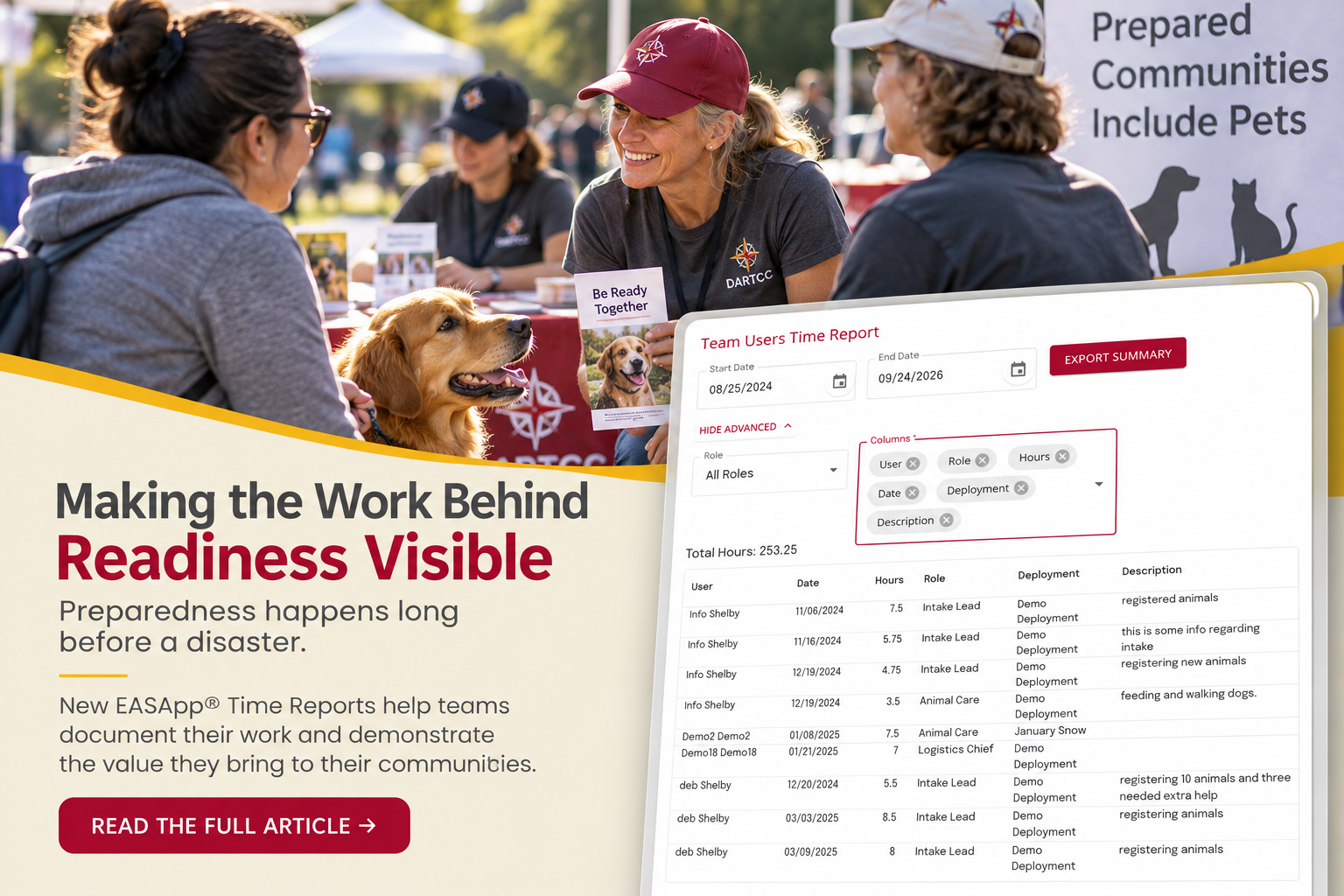
Team Admins can now generate reports for an individual volunteer, a specific deployment, or the entire team over any selected date range. Reports can include hours, dates, roles, deployments, and descriptions of the work performed, with results exportable as CSV or PDF.
And because teams can customize job titles and track time both during and outside deployments, they can capture a much fuller picture of what preparedness requires — from animal care and logistics to training, planning, administration, community outreach, and education.
Building Trust Is Part of Preparedness
Community outreach is not an extra activity that happens when there is time. It is part of being ready.
When teams are present in their communities before a disaster, people have an opportunity to learn who will be there to help, what services may be available, how emergency animal sheltering works, and what they can do now to prepare.
Those relationships build familiarity and trust. And when an emergency happens, that trust can make it easier for people to seek help, follow guidance, and make decisions for themselves and their animals.
That work takes time — and historically, much of it can be difficult to see or quantify.
Time Reports help change that.
Showing the Value a Team Brings to Its Community
The value of an animal response team is not measured only by the number of animals sheltered during a disaster.
It is also found in the hundreds — and sometimes thousands — of hours people contribute to make their communities more prepared.
By documenting that work, teams can begin to put real numbers behind their contribution. They can show community leaders, emergency management agencies, local governments, funders, and supporters what it takes to maintain response capability throughout the year — not just during an emergency.
That data can support grant applications and fundraising, demonstrate volunteer contributions, help justify requests for resources, and give public officials a clearer understanding of the capacity their local animal response team provides.
It helps turn work that is often invisible into something a community can see, understand, and value.
Preparedness takes people, relationships, time, and commitment. Now teams have a better way to tell that story.