Chapter One
The Question That Started It All
Life-changing moments rarely announce themselves. Sometimes they begin with a conversation around a table.
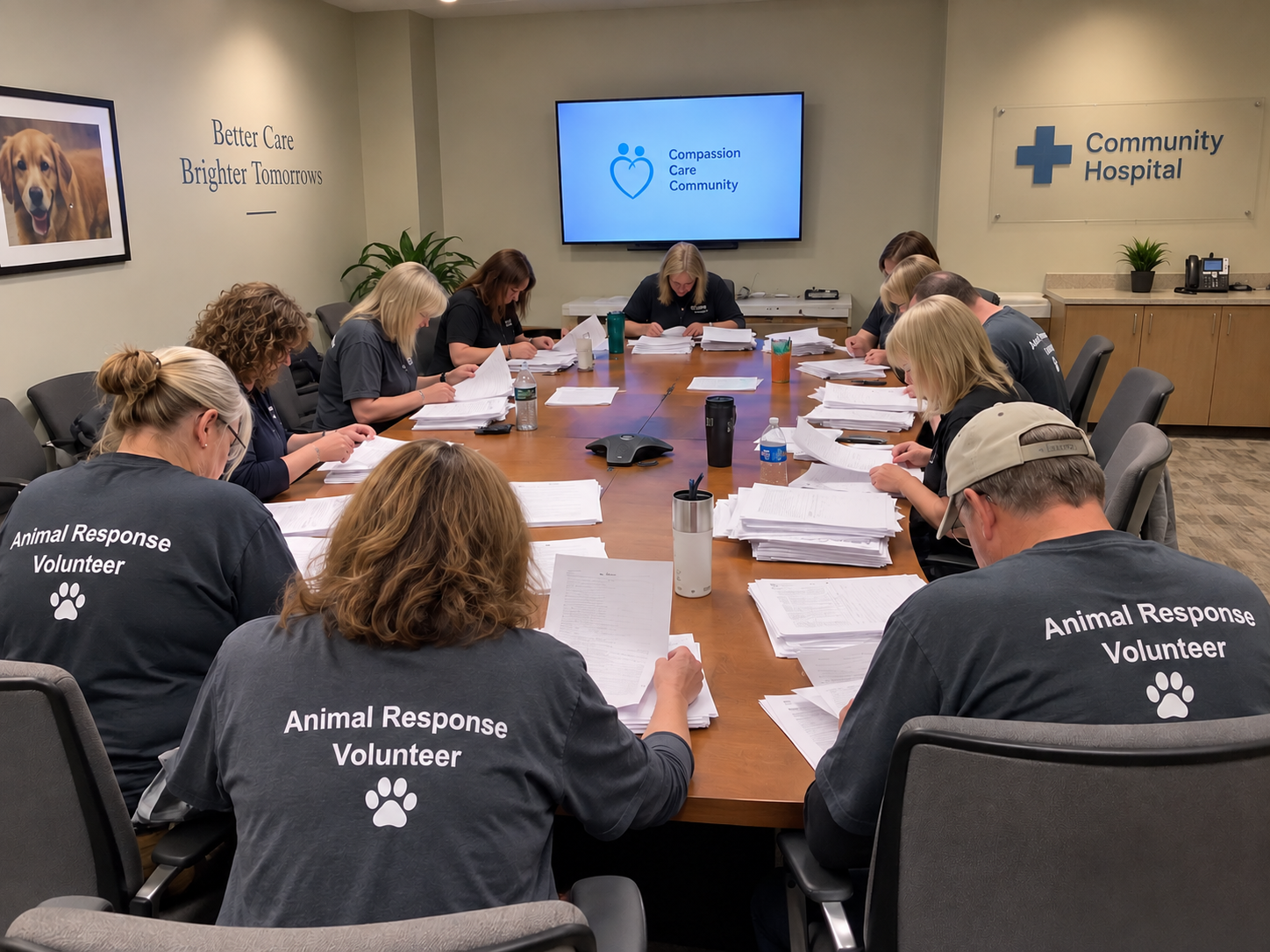
One evening in 2019, about a dozen volunteers gathered for a meeting of the Central Vermont Disaster Animal Response Team (CVDART). Like animal response teams across the country, we were preparing for the disaster everyone hoped would never happen.
I joined CVDART because I love animals and wanted to help. Like everyone else around that table, I was there to learn how we could care for animals and support their families when disaster struck.
That evening, our Chair, Lisa Lemieux, walked us through the forms we would use to operate an emergency animal shelter:
Intake. Daily Care. Medical records. Release paperwork.
Those forms represented years of knowledge and experience from animal responders. They captured what teams needed to know and what animals needed throughout their stay. But that information lived on paper, collected in a folder that had to be stored somewhere in the shelter and found whenever someone needed it.
As I listened, another part of my life began to intersect with this new one. I had spent close to thirty years developing technology to solve problems for businesses, government agencies, and nonprofits, and I found myself looking at those forms through that lens.
One question kept coming back to me:
Why are we using paper?
The question wasn’t a criticism of the forms. In fact, quite the opposite.
The knowledge we needed was already there.
What was missing was a better way to make that information available when and where responders needed it.
Paper can get wet or misplaced. Handwriting can be difficult to read. Information may need to be copied from one place to another. And during a disaster, time spent searching for information is time that cannot be spent caring for an animal, supporting another responder, or reassuring a worried guardian.
So I started looking for another option.
I searched veterinary software, animal shelter systems, and emergency management technology. There were excellent products available, but I couldn’t find one designed around the very specific needs of volunteers operating a temporary emergency animal shelter during a disaster.
Eventually, that search led to another question:
What if we built it together?
Stay tuned for Chapter 2, Could we replace paper?